Part IV
The Weiland/Hennessy Story
As told by William Hennessy — a lifelong artistic friendship
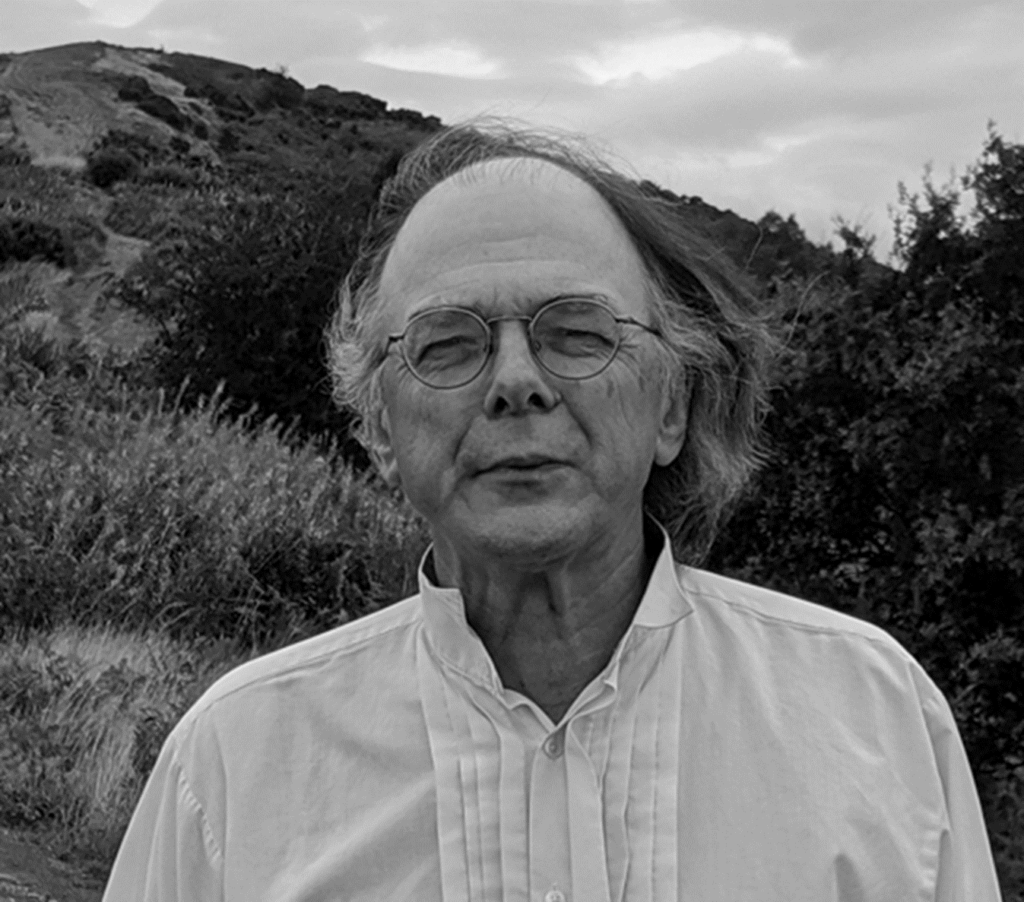
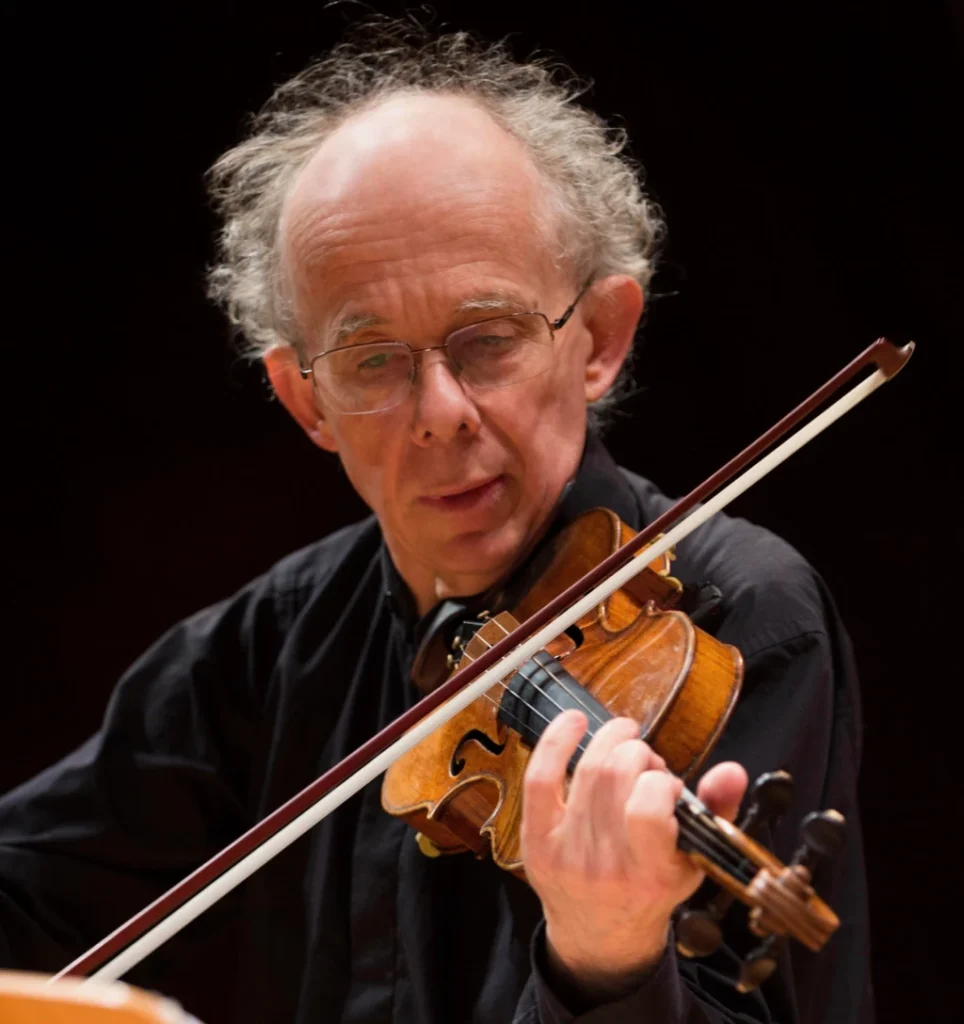
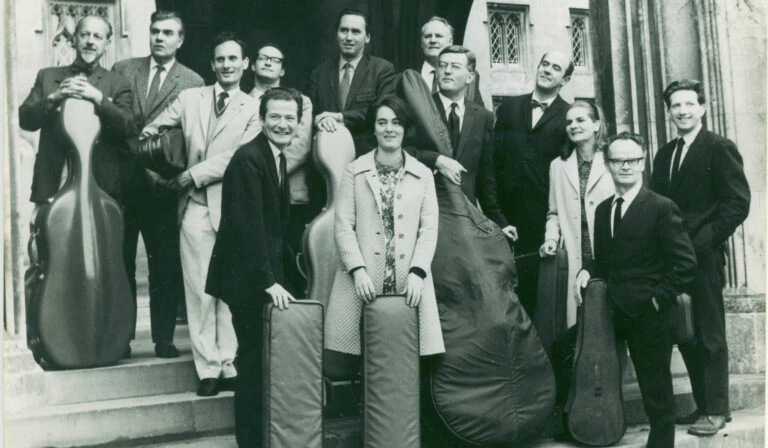
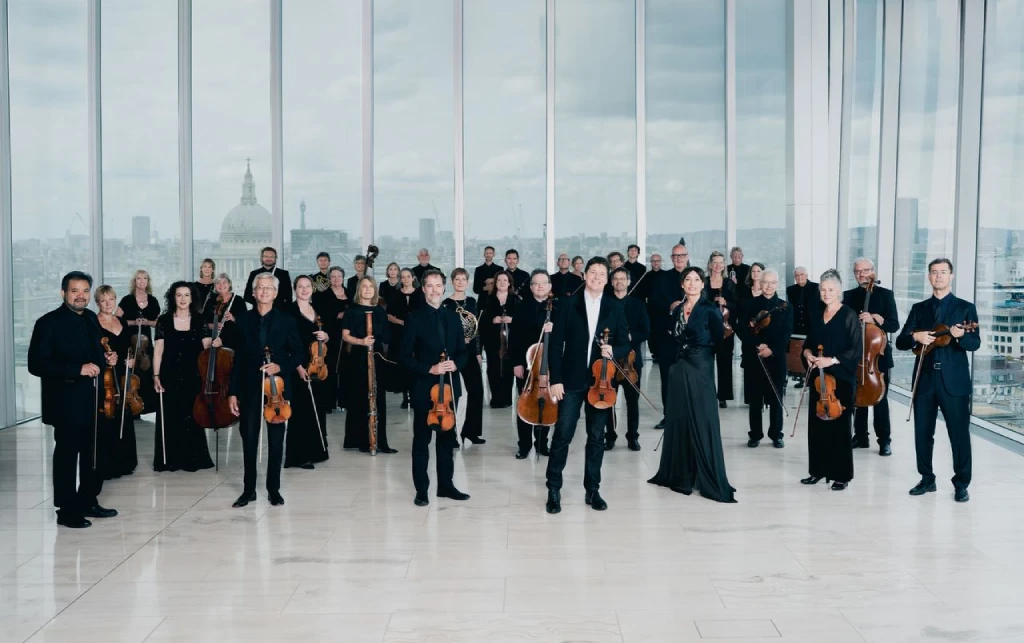
My first day with the celebrated Academy of St Martin in the Fields orchestra was in London in January 1978. On that day I found myself sharing a 1st Violin desk with a mild-mannered long-haired gentleman who I later found out was often mistaken for one of the Beatles. Whilst I was well prepared for this recording session of Frank Martin’s Petite Symphonie Concertante (you can hear this recording on Spotify) Douglas was less so, yet was managing the work better than me.
And so began a life friendship.
He drove me back to London from Bath one evening after an Academy concert and I remember making some rather careless disparaging remarks about the great English composer Edward Elgar. (I later realised I was merely mimicking an inherited prejudice of my dear Hungarian teacher Robert Pikler, but I shouldn’t blame him). In hindsight I might deem myself lucky to have escaped unscathed, for in time I came to understand that Elgar was one of Douglas’ great heroes, what’s more, Malvern, Worcestershire was the birthplace of both of them.
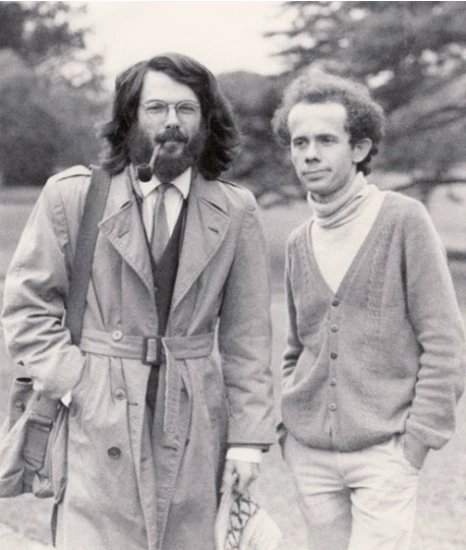
Douglas Weiland & William Hennessy Sydney 1981
So for a few years we travelled with the Academy of St Martin in the Fields on many tours of Europe and spent many hours together, read some of the same books, played table tennis in the hotels, were young at the same time, and shared much, especially in music. But I had no idea at all that for all of his previous thirteen years he had considered himself a composer. Yet a composer who had basically nothing to show for it! …….. He only told me this years later.
Prior to a day when Douglas was to come to my house in Cheshunt, Hertfordshire for dinner Douglas hesitantly asked if I might do him a small favour during his forthcoming visit. Would I play through some sketches for two violins which had been written by him?
And so the day came and at one point we popped upstairs and took our violins out. But Douglas by now was in a real sweat, which confused me. With seriously sweaty brow he then placed what seemed to me some very modest notes on the music stand and we played these small creations through a few times. I didn’t think much of it, but was concerned for my friend’s obvious anxiety in the moment so I trod carefully.
I left London after three years and took up four and a half years of Concertmaster duties of the Tasmanian Symphony Orchestra during which time I was regularly playing concertos with the leading Australian orchestras. During this time I was also invited to be the guest leader of the Sydney String Quartet for a three month national tour for Musica Viva Australia which included 15 performances of the Schubert String Quintet (2 cellos) with guest Dutch cellist, the late Anner Bylsma.
About 6 weeks prior to the commencement of that tour I received a very sad phone call from Sydney String Quartet cellist Nathan Waks. Dorel Tincu, their fine, long time 2nd violinist had suddenly passed away.
With regards the forthcoming scheduled tour Nathan Waks suggested that we cancel it, but he also asked if I saw any other possibility.
I thought of one. Douglas and I had never played chamber music together, but my instinct nevertheless was that we should invite him to leave London for a few months and come on this big tour together.
He came as a guest and after the three-month Australian tour we came to the view that one day Douglas and I should start our own quartet together. Then Douglas went back to London and I went back to Hobart.
Over the next couple of years Douglas and I corresponded by snail mail from time to time. There was one particularly lengthy period of about 9 months in which we didn’t correspond at all.
After that 9 month period I sat at my upstairs desk in Sandy Bay, Hobart, looking out at the beautiful Derwent River from an expansive window.
I began writing,
Dear Douglas,
We are not getting any younger. Are we serious about this quartet idea or not? ………………
I did not know it at the time, but at about the same time, Douglas had sat down in London and penned the same letter to me.
The letters crossed, all quite mysterious! So we took it as a good omen; this becoming the first moment of the Australian String Quartet story.
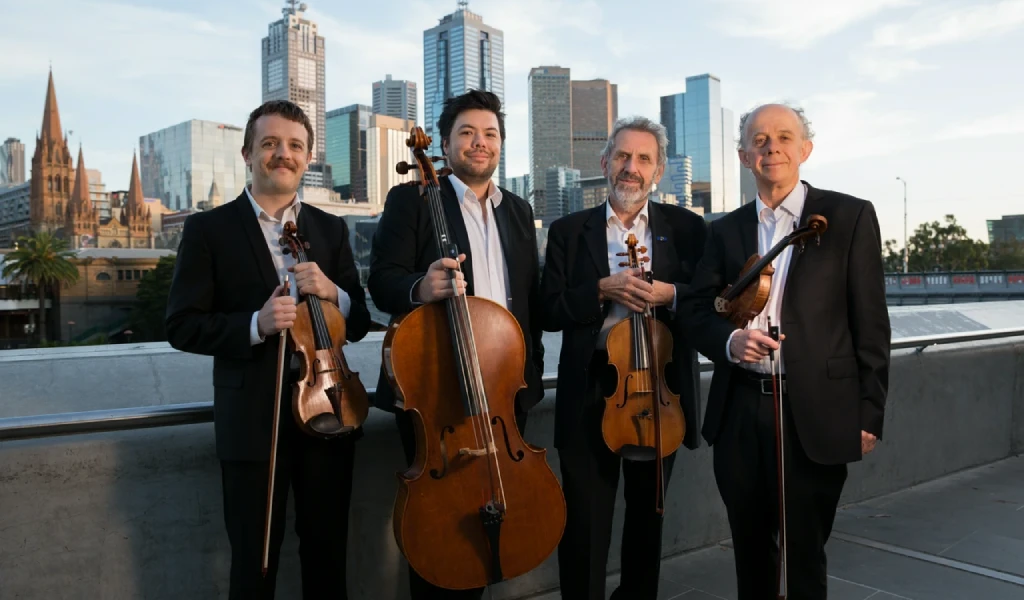
Then, long story short, about two years later, in May, 1985 the Australian String Quartet was established in Adelaide together with colleagues Keith Crellin – viola, and Janis Laurs – cello, and with great support by the then South Australian Premier, the late Honourable John Bannon, John Russell OAM and Brian Chatterton OAM.
When Douglas arrived from London with his wife Hilary Weiland in Adelaide in May 1985, he brought with him two completed movements of his Voice Quintet. The third movement was completed in Adelaide.
I suggested that the quartet should read through this work, for by now I knew he was committed to more than mere brief sketches for two violins.
To my astonishment, what followed was to become one of the two most defining moments of my entire artistic life. Nothing could have prepared me for this. How could this possibly be the creation of my dear, rather eccentric English friend and colleague whom I had barely thought of as a composer?
But I could not deny that this was nothing less than music for the ages ….. the music of a master, master composers being almost as rare as hen’s teeth.
Or at least one might claim that all the known master composers in the western tradition of the last 500 years might reasonably fit in my home for a party. Perhaps 50 or 60 in total? But I realised that Douglas would be one of them, much as he wasn’t yet known.
I was in shock. Still am really. What is this extraordinary mystery that separates the ordinary from the remarkable. But there it was, right in front of my eyes and ears. I simply couldn’t deny it.
It was in its own way an equivalent moment to my 10 year old experience of hearing my then teacher Harry Curby leading the Sydney String Quartet (which included my later long time violin teacher Robert Pikler as violist) playing the Second Rasumovsky Quartet of Beethoven op 59 no 2 in my home town of Wollongong.
My 10-year-old Beethoven moment was so compelling that my destiny was immediately sealed, making other directions impossible. Whatever it was that I was listening to, this is exactly the sort of thing my life was unquestionably going to be about.
And so it turned out, 20 years later, that both this Voice Quintet, as a world premiere (with mezzo soprano Hilary Weiland) and the Second Rasumovsky Quartet of Beethoven were on the printed program as we found ourselves nervously walking out on stage to a packed Adelaide Town Hall at the Adelaide Festival at 8.15pm on 7th March 1985 for the official debut of the Australian String Quartet, of which I was the leader and Douglas in the second-violin role. The concert was broadcast live across the nation and the press were there with knives sharpened, and with subsequent media response either totally for us, or totally against us.
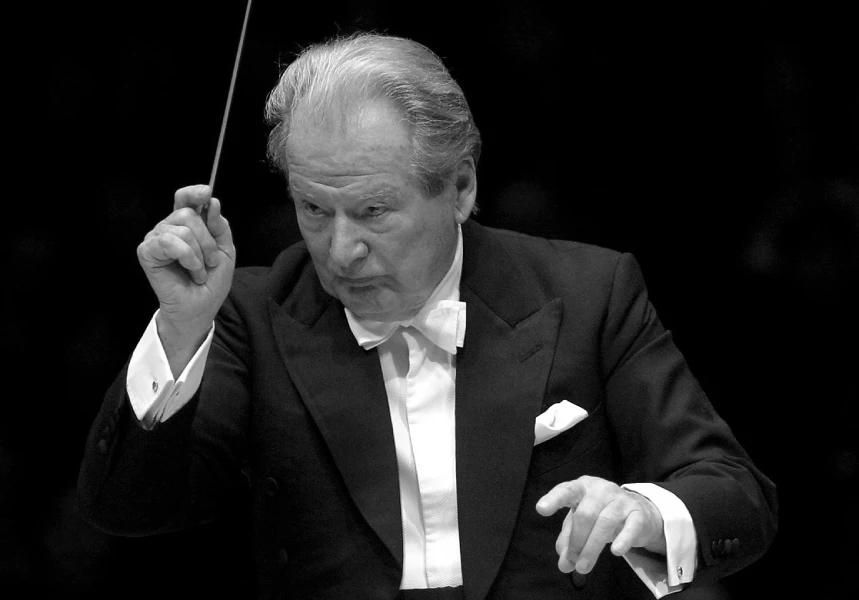
This moment in Australian musical history has resonated ever since. Whilst Roger Covell in the Sydney Morning Herald mistakenly dismissed the Voice Quintet as derivative and inconsequential, when Sir Neville Marriner later heard this performance, this same Voice Quintet became the building block for Douglas Weiland becoming Sir Neville’s most commissioned composer – three major commissions in all spanning 14 years, starting with the Divertimento for Strings.
The Voice Quintet is a work of beauty and mystery, and of wild, yet totally refined invention. I know of nothing like it. When eminent Australian composer Richard Mills heard it in a private ASQ performance prior to the ASQ debut his first response was……… “that’s as good as Schöenberg’s 2nd Quartet” (This latter 1908 work is one of the string quartet icon’s of the 20th century, and like the 1985 Weiland Voice Quintet includes a woman’s voice).
Then after a moment’s further reflection Richard said …….. “ no, it’s better”.
The reader is invited to make the comparison for themselves.
Long-time leader of the English Chamber Orchestra José-Luis Garcia had worked extensively with the great English composer Benjamin Britten. After José-Luis Garcia heard the Weiland Voice Quintet he turned to me and said simply ..….. “ big news!”
On numerous occasions over the past 40 years people have suggested that my commitment to Douglas’ music has something to do with friendship. Douglas himself has suspected this on a number of occasions – such is the vulnerability of even a great artist.
But nothing could be further from the truth. I advocate for the music of Weiland for precisely the same reason that Beethoven’s Second Rasumovsky Quartet defined my artistic life when I was 10, ie that I had no say in it. It is the music itself which is powerful and demands attention.
And so the Australian String Quartet began it’s official public life. Within three years the quartet had been rapturously received throughout Australia, and in the UK, Moscow, Yerevan, Latvia, Belarus, Hong Kong, China, Yugoslavia, Italy and extensively in Canada and the United States.
Eg
Writing about the ASQ USA debut, music critic and former leader of the celebrated Kodaly Quartet Michael Barta wrote ……
“It is not hard to predict that the Australian String Quartet, because of its high level of artistry, will be a group in high demand on the American concert stage”
Or of the ASQ debut in Halifax Nova Scotia Canada, the local music critic said……
“The North American ear, slightly jaded by high energy string tone, is struck by the relaxed natural sound of the Australians……you will travel far to find any chamber music players as fine…….they took us into their world and made us feel like citizens.”
And I remember a particular concert in Venice’s La Fenice in 1988 where we had performed Douglas’ 1st String Quartet, as we did on many occasions throughout the world. After the concert a woman approached me to tell me that…….
“I have waited all my life to hear new music of this quality. I knew it must exist somewhere. Now I’ve heard it.”
I have waited all my life to hear new music of this quality. I knew it must exist somewhere. Now I’ve heard it.”
A concertgoer, Venice’s La Fenice, 1988 — after an ASQ performance of Weiland’s First String Quartet
And so we made our way through the first five years of the life of the Australian String Quartet until one day Douglas announced that he must return to England and devote his entire life to his work as a composer. The next seven years were joyfully spent with our new 2nd violinist Elinor Lea until I myself decided to move to Melbourne, but of course the ASQ itself has endured and is alive and well to this very day.
Douglas has maintained a close relationship with Australia. For him Australia is effectively a second home. This translates right down to the fact that for him, Australia, to this day, its lands and its people remain a significant part of his artistic inspiration whether it be the “Arkaroola” of the 1st String Quartet, the “In Arnhem Land” of the Piano Quintet, the “Homage to Truganini” of the 9th Quartet or “The Seven Seasons” in acknowledgement of the peoples of the Kulin Nations and their traditional seven seasons (as stated by many), or his prefatory dedications to other Australians he has written for.
In the years since Douglas left Australia in 1990 our artistic association has grown in many ways. He has returned to Australia on a number of occasions, and I have travelled quite a few times to England. Both our cross-world travels here have always included the ongoing journey of his music and how it might gain its rightful place in the world.
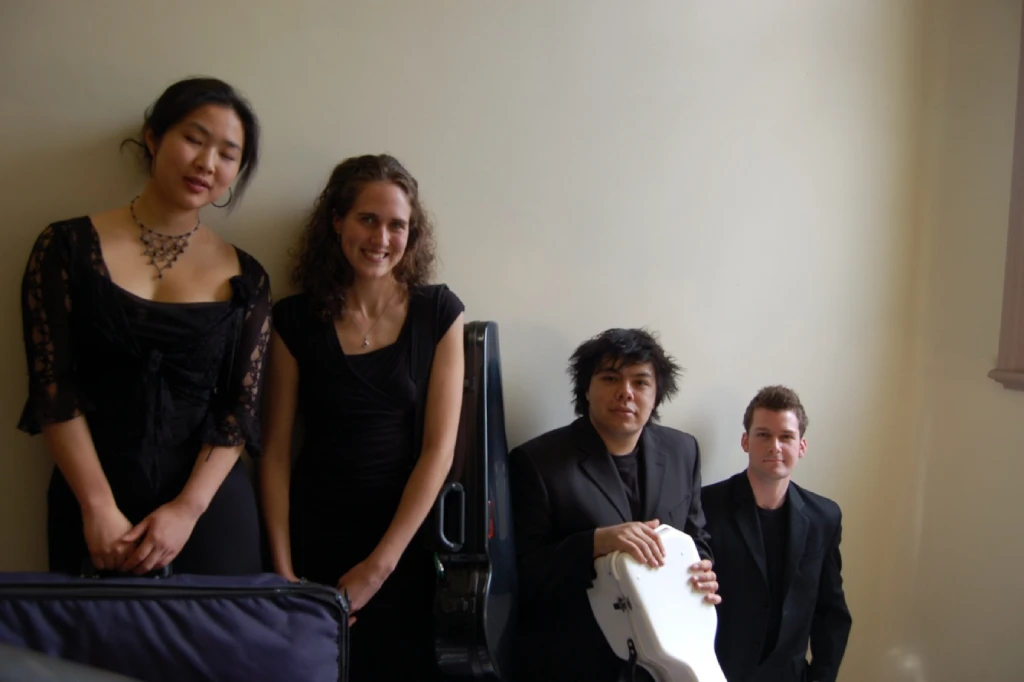
One such visit of Douglas’ was to assist we of the Melbourne Quartet with the recording of his 4th and 5th Quartets for the prominent record label Naxos; This Naxos recording came to have a wonderful critical response from the UK, USA, Germany and in Australia.
Quite typical in its own way was the prominent German new music magazine “HorBar Neue Musikzeitung”. The opening of the review read…..
“No other musical genre has remained as alive over the past 250 years as the string quartet.
Despite a strict aesthetic that demands compositional experience, creative earnestness, ongoing originality and a close relationship to its own history, it has survived every epoch and every change of style without danger.
One could even say: precisely because the string quartet, in its intimacy and tonal unity, represents the “nakedness of musical art” (C.M. von Weber) and throws the composer back to the inner forces of musical composition. It is always about the whole.
This is also the case with the two string quartets No. 4 op. 50 (2011) and No. 5 op. 51 (2012) by the English composer Douglas Weiland.”
In short, a profound acknowledgement of a master, the quartet medium itself being at the very summit of composers’ aspirations.
His next commitment in Australia was in February 2026 when he was in Melbourne for three weeks to work with Markiyan Melnychenko and Rhodri Clarke in preparation for their recording of all the Weiland Violin Sonatas on Toccata Classics (London) and their Melbourne Recital Centre concert of the same works on Sunday 22nd February at 5pm in the presence of the composer. Douglas Weiland also worked with Markiyan Melnychenko (violin), William Hennessy (viola) and cellist Josephine Vains on the Weiland 2008 work “Twelve Words of Our Lord and Saviour Jesus Christ from and beyond the Cross” which will be recorded for Toccata Classics later this year.
The music of Douglas Weiland, like all great music, belongs to the world – to all of humanity. But composers live in specific countries, in this case for all but five years of his life (when he lived in Australia) it has been England.
But as is the case that Dvorak’s “New World” Symphony, Cello Concerto and “American” Quartet are also part of American culture, even considerably more so it is the case that Weiland’s music is also part of Australian culture.
Douglas Weiland’s music is a profound representative of the best of our humanity, of love of beauty and form, unlimited imagination and of the mystery of the great artist’s ability to connect the past and the future in a unique vision created in the present.